

Delaware Premises Liability Law and Your Right to Compensation After a Fall
The property owner or business operator is liable for your slip and fall injuries if they knew about the hazard (or should have known) and failed to fix it or warn you. Delaware law requires property owners to keep their premises reasonably safe for visitors. When they don’t, and you get hurt, you can recover medical bills, lost wages, pain and suffering, and more. There are no caps on these damages in most Delaware slip and fall cases.

Slip and fall cases look simple on the surface. You walked into a store, stepped on a wet floor, and broke your wrist. The store should have cleaned it up or put a sign out. Case closed, right?
Not quite. I handle these cases regularly, and they’re among the most heavily disputed personal injury claims in Delaware. Property owners and their insurance companies fight them hard because the legal standard requires you to prove more than “I fell and got hurt.” You need to show the property owner was negligent, and that means proving they knew about the hazard, or should have known, and did nothing about it.
Here’s how liability works in Delaware, what you need to prove, and what your case could be worth.
How Delaware Determines Liability in Slip and Fall Cases
Delaware slip and fall claims fall under premises liability law. The core question is whether the property owner breached their duty of care to you as a visitor. The level of that duty depends on why you were on the property in the first place.
Invitees: The Highest Duty of Care
If you were on the property for a business purpose, like shopping at a store, eating at a restaurant, or visiting a medical office, you’re classified as an invitee. Property owners owe invitees the highest duty of care under Delaware law. That means they must:
- Regularly inspect the property for hazards
- Repair known hazards within a reasonable time
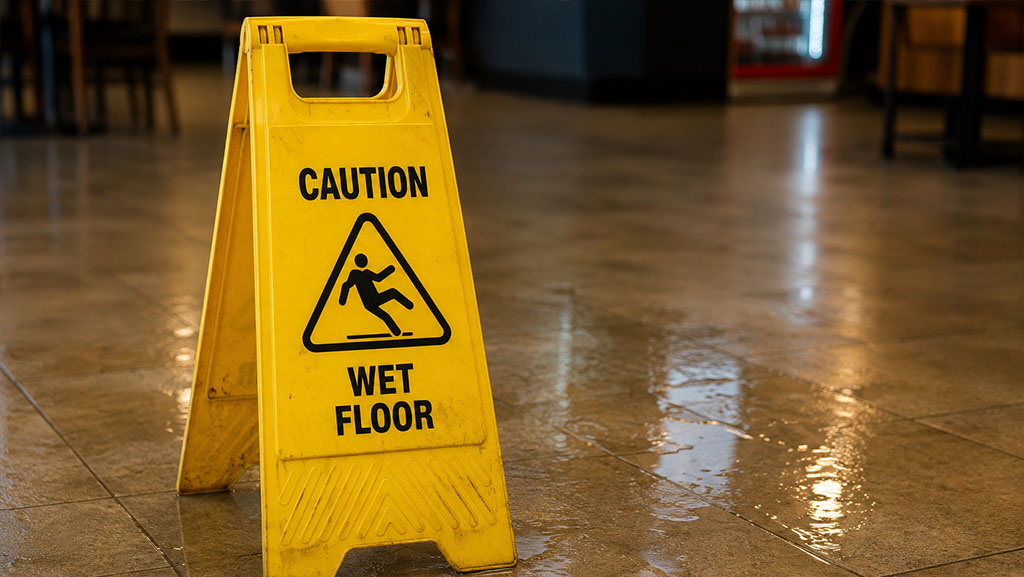
- Warn visitors of hazards that can’t be immediately repaired (wet floor signs, cones, barriers)
- Maintain the property in a reasonably safe condition for its intended use
Most slip and fall claims in Delaware involve invitees, because most falls happen at businesses, grocery stores, restaurants, and other commercial properties where the owner benefits from your presence.
Licensees and Trespassers
A licensee is someone on the property for their own purposes with the owner’s permission, like a social guest at a private home. A trespasser is someone on the property without permission. Delaware law provides that property owners owe licensees and trespassers a duty to refrain from intentional, willful, or wanton conduct that could cause injury. They must also warn of known hazards that aren’t obvious. But the active duty to inspect and repair that applies to invitees does not extend to these categories.
What You Must Prove to Win a Slip and Fall Case
Proving a slip and fall claim in Delaware requires four elements. Miss any one of them, and the case fails.
1. A Dangerous Condition Existed
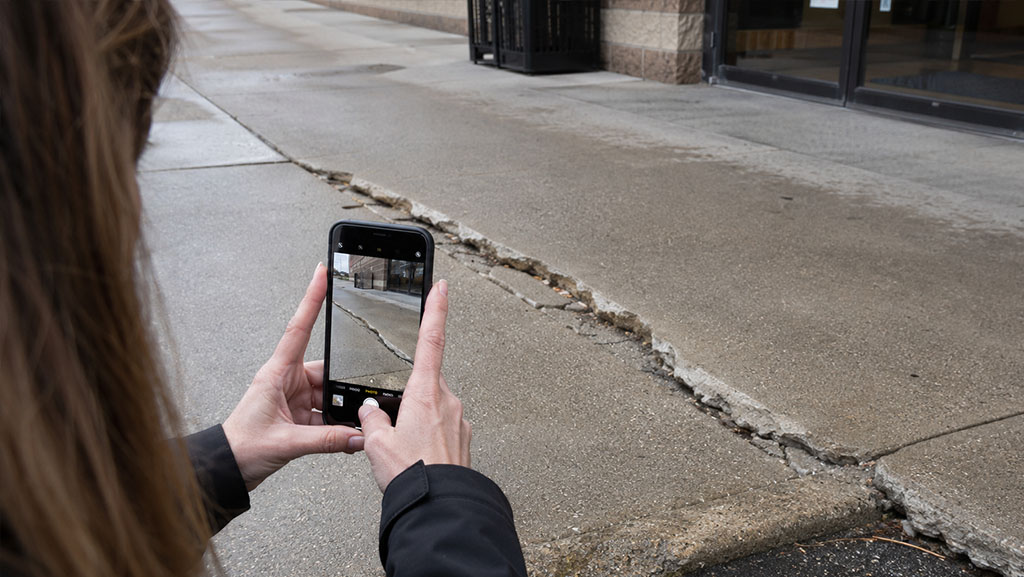
You need to identify a specific hazard that made the property unreasonably dangerous. Common hazards include wet or slippery floors, torn or bunched carpeting, uneven pavement or broken sidewalks, poor lighting in stairwells or parking lots, ice or snow that wasn’t cleared, spilled merchandise or liquids in store aisles, and missing or broken handrails.
The hazard must be something the property owner could have addressed. A puddle that formed from a roof leak over the course of hours is a hazard the owner should have addressed. A spill that happened 30 seconds before you walked through it is harder to pin on the owner.
2. The Property Owner Had Notice
This is where most slip and fall cases are won or lost, and it’s where I spend the most time building a case. You must prove the property owner either knew about the hazard or should have known about it through reasonable care.
Actual notice means the owner was directly aware of the danger. An employee who saw the spill and walked past it, a customer who reported the hazard to a manager, or a maintenance request that went ignored all establish actual notice.
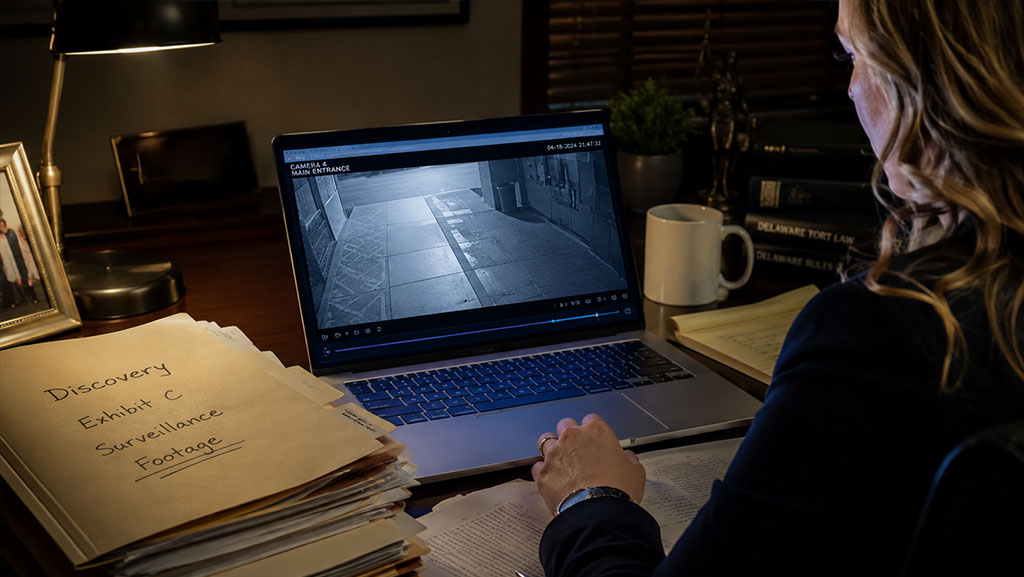
Constructive notice means the hazard existed for long enough that a reasonable property owner, exercising ordinary care, would have discovered and addressed it. A puddle that sat in a grocery aisle for 45 minutes with foot traffic walking around it supports constructive notice. Surveillance footage, maintenance logs, and cleaning schedules are the most common evidence used to establish (or disprove) constructive notice.
3. The Owner Failed to Act
Knowing about a hazard isn’t negligence by itself. The owner had to fail to take reasonable steps to fix it or warn you about it. If the store mopped the spill within five minutes and put up a wet floor sign, they may have acted reasonably even though the hazard existed briefly. If the spill sat for an hour with no response, that’s a failure to act.
4. The Hazard Caused Your Injury
You must connect the specific hazard to your fall and your fall to your injuries. Medical records documenting treatment that began immediately after the fall, an incident report describing how the fall happened, and photos of the hazard all build this link.
Delaware’s Comparative Negligence Rule
Delaware follows a modified comparative negligence system under Title 10, Section 8132. This means the property owner’s defense team will try to assign a percentage of fault to you for the fall.
The rule works like this: if you are found 51% or more at fault for the accident, you recover nothing. If your fault is 50% or less, your compensation is reduced by your percentage of fault. A $100,000 verdict where you’re found 20% at fault results in an $80,000 recovery.
Common arguments the defense uses to shift blame to you include:
- You were looking at your phone instead of watching where you walked
- You were wearing inappropriate footwear for the conditions
- You ignored a visible warning sign (wet floor cone, caution tape)
- The hazard was open and obvious, and you should have seen it
- You were in a restricted area where customers weren’t supposed to be
Don’t let this discourage you from filing a claim. The defense raises these arguments in nearly every case. I’ve heard all of them, and I know how to counter them with evidence and context. A 20% fault reduction on a strong case still puts real money in your pocket.
What Damages Can You Recover?
Delaware does not cap personal injury damages in most slip and fall cases. If you can prove liability, you’re entitled to the full value of your losses.
Economic Damages
- Medical expenses. Emergency room visits, surgeries, physical therapy, prescription medications, imaging, specialist visits, and any future medical care your injuries require.
- Lost wages. Income you lost because the injury prevented you from working, including salary, hourly wages, bonuses, and commissions.
- Future lost earning capacity. If the injury permanently affects your ability to work at your prior level, you can recover the difference in earning capacity over your remaining career.
- Out-of-pocket costs. Transportation to medical appointments, home modifications, assistive devices, and household help you needed because of the injury.
Non-Economic Damages
- Pain and suffering. Physical pain from the injury and its treatment, both past and future.
- Emotional distress. Anxiety, depression, sleep disturbance, and other psychological impacts of the injury.
- Loss of enjoyment of life. Activities, hobbies, and daily pleasures the injury has taken from you.
- Disfigurement and scarring. Visible physical changes resulting from the injury or surgical treatment.
The Government Property Exception
If your slip and fall happened on property owned by a Delaware state agency, county, or municipality, a $300,000 cap applies to total damages under the Delaware Tort Claims Act. Government slip and fall claims also have shorter notice requirements. You may need to provide written notice to the government entity before filing suit, and the deadlines vary by municipality. If your fall happened on government property, call me immediately. I’ve seen people lose valid claims because they didn’t know about the shorter notice window until it was too late.
Proving Your Case: Evidence That Matters
Slip and fall evidence deteriorates fast, and I can’t stress this enough. Surveillance footage gets overwritten. Spills get cleaned. Witnesses leave and forget. The earlier you start preserving evidence, the stronger your case will be.
At the Scene
- Photos and video. Photograph the hazard, the surrounding area, any warning signs (or lack of them), your injuries, your footwear, and the lighting conditions. Take wide shots and close-ups.
- Witness information. Get names and phone numbers from anyone who saw the fall or saw the hazard before you fell.
- Incident report. Ask the property owner or manager to complete an incident report. Get a copy or photograph it.
- Your own notes. Write down exactly what happened while it’s fresh. Include the time, location, what you were doing, what you stepped on or slipped on, and how you fell.
After the Scene
- Medical records. See a doctor the same day if possible. Describe the fall and the mechanism of injury in detail. Every day you wait to seek treatment weakens the connection between the fall and your injuries.
- Surveillance footage request. Have your attorney send a preservation letter to the property owner immediately. Most commercial surveillance systems overwrite footage within days or weeks.
- Maintenance and inspection records. Your attorney can subpoena the property’s cleaning schedules, inspection logs, and prior incident reports to establish a pattern of negligence.
Common Locations for Slip and Fall Accidents in Delaware
Slip and fall accidents happen everywhere, but certain locations produce claims more frequently because of the volume of foot traffic and the types of hazards present.
- Grocery stores and supermarkets. Spilled produce, leaking freezer cases, wet floors from mopping, and dropped merchandise create constant hazards in high-traffic aisles.
- Restaurants and bars. Grease on kitchen floors, spilled drinks near bars, and wet entryways during rain or snow are common culprits.
- Retail stores. Cluttered aisles, fallen merchandise, poorly maintained flooring, and inadequate lighting in fitting rooms and stockrooms.
- Parking lots and sidewalks. Potholes, cracked pavement, uneven surfaces, poor drainage, and ice or snow that wasn’t cleared.
- Office buildings and apartment complexes. Worn carpeting, loose stair treads, broken handrails, and poorly lit hallways.
- Government buildings and public spaces. The same hazards apply, but the claims process involves the Tort Claims Act and its $300,000 cap.
Why Slip and Fall Cases Need an Attorney
Property owners and their insurance companies have standard defenses for slip and fall claims. “The hazard was open and obvious.” “There was a warning sign.” “We didn’t have time to discover the spill.” “The plaintiff wasn’t paying attention.” I’ve heard every one of these, and they’re predictable once you know the playbook.
Having worked the insurance defense side of these exact cases gives me something most plaintiff’s attorneys don’t have: I’ve sat in the room where these defenses were built. I know which arguments the defense actually believes in and which ones are just negotiation leverage. That perspective changes how we evaluate settlement offers, how we prepare for deposition, and how we present the case at trial.
FAQs About Slip and Fall Accidents in Delaware
Do I have to prove the property owner knew about the hazard?
You have to prove actual or constructive notice. Actual notice means the owner knew. Constructive notice means the hazard existed long enough that a reasonable owner would have found it through ordinary inspection. Surveillance footage and maintenance logs are the strongest evidence for establishing notice.
What if I was partially at fault for my fall?
Delaware’s modified comparative negligence rule reduces your recovery by your percentage of fault. If you were 30% at fault, you recover 70% of your damages. If you were 51% or more at fault, you recover nothing. The defense will try to assign you as much fault as possible, so having evidence that counters their arguments is critical.
How long do I have to file a slip and fall lawsuit in Delaware?
Two years from the date of the fall under Delaware Code Title 10, Section 8119. If your fall happened on government property, shorter notice deadlines may apply. Don’t wait until the deadline is close to contact an attorney.
What if there was a wet floor sign but I still fell?
A warning sign doesn’t automatically eliminate the property owner’s liability. The sign must be visible, placed before the hazard, and adequate for the conditions. A small sign tucked behind a display while a large portion of the floor is wet may not constitute a reasonable warning. The property owner also has a duty to clean the hazard within a reasonable time, not just put up a sign and leave it indefinitely.
Can I file a claim if I fell in a parking lot?
Yes. Parking lot owners have the same duty to maintain safe conditions as indoor business owners. Potholes, cracked pavement, ice, poor lighting, and drainage issues are all actionable hazards. The business that owns or leases the parking lot, the property management company, or both could be liable depending on who is responsible for maintenance.
What if I didn’t report the fall to the property owner at the time?
Not reporting at the scene doesn’t destroy your claim, but it weakens it. Without an incident report, the property owner can argue the fall never happened on their property or that the conditions were different from what you describe. If you didn’t report at the time, contact an attorney immediately so they can send a preservation letter for surveillance footage before it’s overwritten.
Hurt in a Fall? Get Someone in Your Corner Who Knows How the Other Side Thinks.
Slip and fall cases are won on evidence and timing. The longer you wait to act, the more evidence disappears. Surveillance footage gets deleted. Witnesses forget what they saw. The property owner fixes the hazard and moves on.
The Law Office of Heather A. Long handles premises liability cases throughout Delaware, including the Middletown, Odessa, and Townsend communities. Heather spent years on the insurance defense side of these exact cases before switching to represent the people who get hurt. She knows how property owners and their insurers build their defenses because she used to help them do it.
Call (302) 466-5664 to talk about what happened. You get our office directly, not a call center. The consultation is free, and you don’t pay unless we win.