

How to Recover Damages From an Uninsured Driver in Delaware
If an uninsured driver caused your accident in Delaware, you still have options. Your own auto insurance policy likely has coverage built for exactly this situation, and Delaware law gives you the right to go after the at-fault driver directly in court. The path forward depends on what coverage you carry, how much your damages are worth, and whether the other driver has anything worth pursuing.

I see this scenario more often than most people expect. Roughly 9% of drivers on Delaware roads have no insurance at all. That’s nearly 1 in 10 drivers you share the road with, carrying zero coverage if they cause a crash. When one of them hits you, the financial pressure builds fast. Medical bills pile up. Your car sits in a shop. You’re missing work. And the person who caused all of it can’t pay.
But Delaware’s insurance framework was built with this problem in mind. Between your own policy’s protections, your legal right to sue, and the penalties the state imposes on uninsured drivers, you have real paths to compensation. Here’s how each one works.
Delaware’s Auto Insurance Requirements and Why They Matter
Delaware law under Title 21, Section 2118 requires every registered vehicle to carry four types of coverage simultaneously. No exceptions, no choosing one over another. All four must be active on every policy:
- Bodily injury liability: $25,000 per person / $50,000 per accident
- Property damage liability: $10,000 per accident
- Personal injury protection (PIP): $15,000 per person / $30,000 per accident
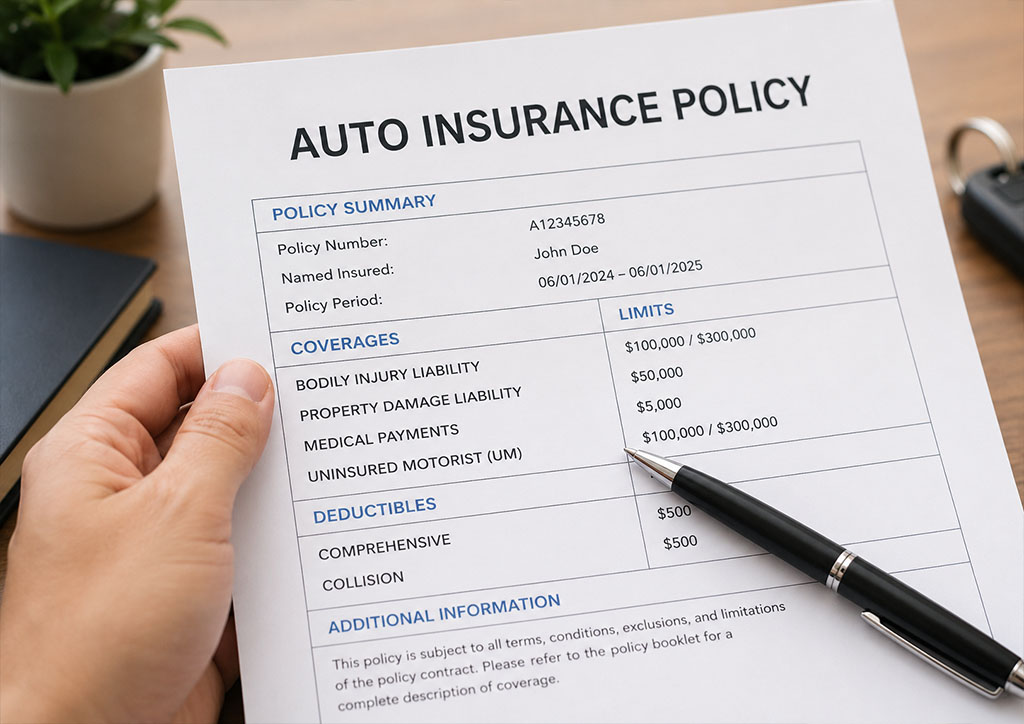
- Uninsured motorist (UM) coverage: $25,000 per person / $50,000 per accident
That last one, uninsured motorist coverage, is the one I care about most in these cases. It’s the reason Delaware drivers aren’t left stranded when an uninsured driver causes a crash. The state requires it at the same limits as your bodily injury liability. And while Delaware law does allow drivers to reject UM coverage in writing, most policyholders never do, which means most Delaware drivers carry this protection whether they realize it or not.
What Uninsured Motorist Coverage Actually Pays For
UM coverage steps into the shoes of the insurance the at-fault driver should have carried. It covers your medical expenses, lost wages, and pain and suffering, up to your policy limits. Think of it as your own insurance company paying what the other driver’s insurer would have paid if they’d followed the law.
This is different from PIP, which only covers medical bills and lost wages regardless of fault. UM coverage specifically compensates you for damages caused by someone else’s negligence, including non-economic damages like pain and suffering that PIP doesn’t touch.
Under Title 18, Section 3902, Delaware insurers are also required to offer you the option to purchase higher UM limits, up to $100,000 per person and $300,000 per accident, or a $300,000 single limit. If you carry those higher limits, your safety net in an uninsured motorist accident gets significantly wider.
Your Personal Injury Protection (PIP) Coverage
Delaware is a hybrid no-fault state. That means your own PIP coverage kicks in after any accident, regardless of who caused it. You don’t need to prove the other driver was at fault to access these benefits.
PIP covers:
- All reasonable and necessary medical costs related to the accident
- Lost wages at 80% of your after-tax earnings
- Substitute household services if your injuries prevent you from handling daily tasks
- Funeral costs up to $5,000 per person
These benefits apply for two years from the date of the accident, as long as expenses stay within your coverage limits. The minimum PIP limit in Delaware is $15,000 per person / $30,000 per accident, but you can purchase higher limits up to $100,000 per person / $300,000 per accident.
One thing to understand about PIP in Delaware: it creates a trade-off. You cannot sue the at-fault driver to recover medical bills or lost wages that were paid by, or were eligible to be paid by, your PIP coverage. PIP handles those categories. Your lawsuit against the at-fault driver covers everything else, primarily pain and suffering, permanent impairment, and any costs that exceed your PIP limits.
Filing a UM Claim With Your Own Insurance Company
When the at-fault driver has no insurance, filing a UM claim with your own insurer is typically your strongest path to compensation. Here’s how the process works and what to expect.
Report the Accident Promptly
Contact your insurance company as soon as possible after the accident. Your policy likely has a reporting deadline, and delays can give your insurer grounds to complicate or deny your claim. When you call, tell them the other driver was uninsured and that you need to file a UM claim.
Document Everything From the Scene
Even though the other driver has no insurance, you still need their information. Get their name, address, phone number, driver’s license number, and license plate. Take photos of both vehicles, the accident scene, traffic signals, road conditions, and any visible injuries. Get contact information from witnesses. If police responded, get a copy of the accident report.
This documentation serves double duty. Your insurance company needs it to process your UM claim, and you’ll need it if you decide to sue the uninsured driver directly.
Get Medical Treatment Without Delay
Go to the emergency room or see your doctor as soon as possible. Gaps in treatment give insurance companies ammunition to argue your injuries aren’t as serious as you claim, or that something other than the accident caused them. Follow every treatment recommendation your doctor makes, and keep detailed records of every visit, every prescription, every referral.
Your Own Insurer Is Not on Your Side
This is the part that catches people off guard. When you file a UM claim, your own insurance company becomes the opposing party. They’re the ones writing the check, so their incentive is to make that check as small as possible. Every tactic that an at-fault carrier uses, questioning your injuries, lowballing your pain and suffering, pressuring you to settle before you know the full extent of your damages, your own insurer will use them too.
I spent years on the insurance defense side before switching to plaintiff work. I’ve sat in the rooms where these strategies get planned. So when I tell you the process isn’t designed to be fair to you, that’s not a sales pitch. It’s something I’ve seen from the inside.
Your insurer may ask for a recorded statement. You’re not required to give one before talking to an attorney. They may also send you to an independent medical examination (IME) with a doctor they chose and they’re paying. These exams are rarely independent. The doctors who do them regularly for insurers tend to have a track record of minimizing injury findings.
Can You Sue the Uninsured Driver Directly?
Yes. Delaware law places no restrictions on your right to sue an at-fault driver for damages, regardless of their insurance status. And unlike some no-fault states, Delaware doesn’t impose a threshold you have to clear before you’re allowed to file a lawsuit. You can sue for the full spectrum of damages:
- Medical expenses beyond what PIP covers
- Future medical costs if your injuries require ongoing treatment
- Lost earning capacity if your injuries affect your ability to work long-term
- Pain and suffering
- Permanent impairment or disfigurement
- Loss of enjoyment of life
Delaware has no caps on personal injury damages in auto accident cases. A jury can award whatever amount they determine is fair based on the evidence.
The Real Question: Can You Actually Collect?
Having the legal right to sue and actually collecting money are two different things. Most uninsured drivers don’t carry insurance because they can’t afford it. That same lack of financial resources often means they don’t have assets worth pursuing.
Before filing a lawsuit, consider whether the uninsured driver has:
- Real property (a house, land, or other real estate you could place a lien against)
- Steady employment (wages that could be garnished under a court order)
- Other valuable assets (vehicles, savings accounts, investments)
If the answer to all three is no, a lawsuit may result in a judgment you can never collect. A judgment in Delaware is valid for 20 years and can be renewed, so the driver’s financial situation could change. But spending time and money on litigation against someone with no assets is a decision that deserves careful thought.
An attorney can run an asset check before you commit to litigation. This is one of the first things a personal injury lawyer will evaluate when you bring them an uninsured motorist case.
If the Driver Has Assets: How Collection Works
If you win a judgment against the uninsured driver and they don’t pay voluntarily, Delaware law gives you tools to collect:
- Property liens. You can file a lien against any real property the driver owns. The lien must be satisfied before the property can be sold or refinanced.
- Wage garnishment. A court order can direct the driver’s employer to withhold a portion of their paycheck and send it to you.
- Payment plans. In some cases, a structured payment arrangement is the most realistic path to recovery, even if it takes years.
The Statute of Limitations: Don’t Wait Too Long
Delaware gives you two years from the date of the accident to file a personal injury lawsuit. Miss that deadline, and you lose your right to sue permanently. No exceptions, no extensions for uninsured motorist cases.
This clock starts ticking the day of the accident, not the day you discover the other driver was uninsured, and not the day your medical treatment ends. Two years sounds like plenty of time until you factor in the months of investigation, medical documentation, and negotiation that go into building a strong case. I’ve had people call me at 22 months and there’s only so much we can do with that timeline. The earlier you start, the more options we have.
Your UM claim with your own insurance company has its own deadlines, typically set by your policy terms rather than state statute. Check your policy or have an attorney review it to make sure you don’t miss any contractual filing windows.
What Happens to the Uninsured Driver?
Beyond your civil claim for damages, the uninsured driver faces significant penalties from the state of Delaware. Driving without insurance is a serious offense under Delaware law.
First Offense Penalties
A driver caught without insurance for the first time faces a fine of $1,500 to $2,000, a six-month suspension of their driver’s license and registration, and a $200 reinstatement fee before they can get their license back. They must also provide proof of insurance to the Delaware Division of Motor Vehicles before their driving privileges are restored.
Repeat Offense Penalties
For a second or subsequent offense within three years, the fine jumps to $3,000 to $4,000, with another six-month license suspension. The court can reduce the minimum fine if the driver provides proof they’ve obtained insurance between the date of the charge and the sentencing date, but that reduction is at the court’s discretion.
These penalties exist as deterrents, but they don’t put money in your pocket. They’re worth knowing about because they add leverage in negotiations. An uninsured driver facing criminal fines on top of a civil lawsuit may be more motivated to reach a settlement.
Steps to Protect Yourself Before an Accident Happens
The best time to prepare for an uninsured motorist accident is before one happens. A few decisions you make when setting up your auto insurance policy can make the difference between full compensation and a financial nightmare.
Don’t Reject UM Coverage
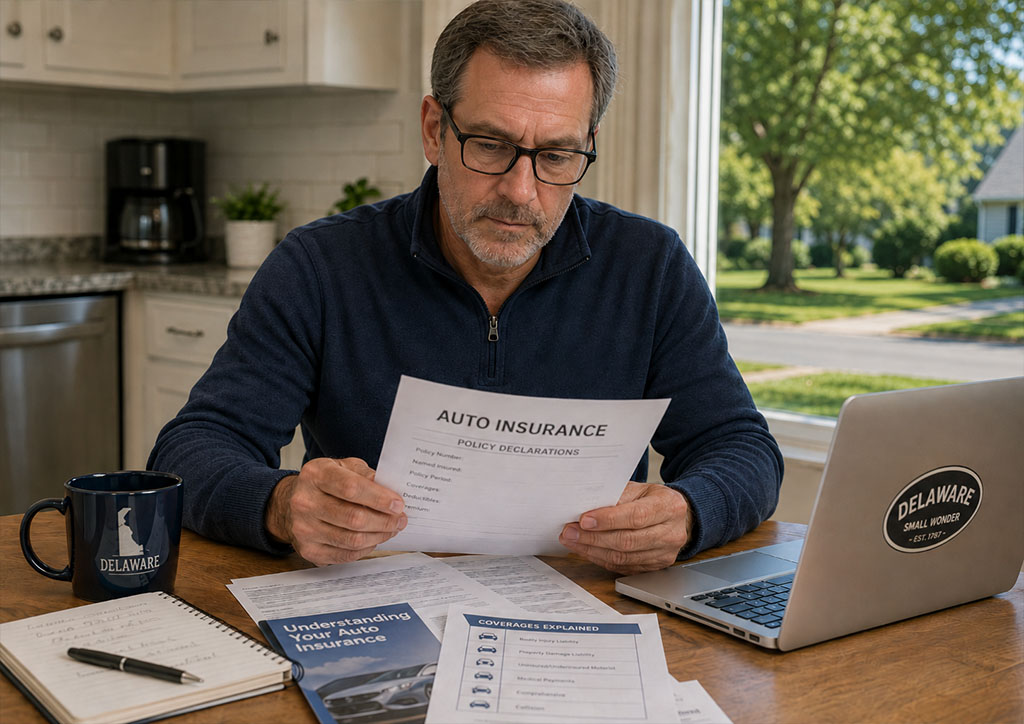
When your insurance agent slides a form across the desk asking if you want to waive uninsured motorist coverage, say no. This coverage exists specifically to protect you when another driver breaks the law. Rejecting it to save a few dollars on your premium leaves you exposed to one of the most common risks on Delaware roads.
Buy Higher UM Limits
Delaware’s minimum UM coverage of $25,000 per person doesn’t go far if you’re seriously hurt. A single emergency room visit can exceed that amount. Delaware law requires your insurer to offer you the option to purchase UM limits up to $100,000 per person / $300,000 per accident. The cost difference is often surprisingly small relative to the protection it provides.
Consider Stacking Your Coverage
If you insure multiple vehicles on the same policy, ask your agent about stacking your UM coverage. Stacking allows you to multiply your UM limits by the number of vehicles on your policy. If you carry $50,000 in UM coverage and insure two cars, stacked coverage could give you $100,000 in available UM benefits. Not every Delaware policy allows stacking, so ask your insurer about your options.
Keep Your Own PIP Limits Adequate
Since PIP is your first line of defense for medical bills and lost wages after any accident, carrying higher PIP limits gives you a larger financial cushion while your UM claim or lawsuit works its way through the process. The minimum $15,000 per person can disappear fast with a hospital stay and follow-up care.
Why You Need an Attorney for Uninsured Motorist Claims
Uninsured motorist cases are more complicated than standard car accident claims because you’re fighting your own insurance company. The adjuster across the table isn’t working for the other driver’s carrier. They work for the company you’ve been paying premiums to, and their job is to pay you as little as possible.

An experienced personal injury attorney knows how to:
- Evaluate the full value of your claim including future medical costs and long-term impacts that aren’t obvious right away
- Handle recorded statements and IME requests so your words and medical records aren’t used against you
- Negotiate with your own insurer using the same strategies they’d use against an at-fault carrier
- Determine whether suing the uninsured driver is worth pursuing based on an asset investigation
- File within all applicable deadlines including both the statute of limitations and your policy’s contractual requirements
A personal injury attorney who has worked both sides of the insurance process, plaintiff and defense, brings a distinct advantage to these cases. Someone who has sat in the adjuster’s chair knows exactly what tactics are coming and how to counter them. That inside perspective turns what feels like an unfair fight into a level playing field.
FAQs About Uninsured Driver Accidents in Delaware
Does Delaware require uninsured motorist coverage?
Yes. Delaware law requires UM coverage at minimums of $25,000 per person and $50,000 per accident. You can only opt out if you sign a written rejection form provided by your insurer. Most drivers never sign that form, which means most Delaware policies include UM coverage by default.
What if I rejected UM coverage on my policy?
If you signed a written waiver rejecting UM coverage, your options narrow significantly. You’d rely on your PIP coverage for medical bills and lost wages, and you’d need to sue the uninsured driver directly for any remaining damages. Talk to an attorney about whether the waiver was properly executed, because insurers sometimes fail to follow the specific procedural requirements Delaware law mandates for a valid rejection.
Can I use my health insurance to cover accident-related medical bills?
Yes, but your health insurer may assert a subrogation right, meaning they can seek reimbursement from any settlement or judgment you receive. Coordinate with your attorney to manage subrogation claims so they don’t eat into your recovery. Your PIP coverage should be used first for accident-related medical expenses, since that’s what it’s designed for.
What if the uninsured driver was driving someone else’s car?
The vehicle owner’s insurance policy is typically the primary coverage in Delaware. If the car’s owner had insurance, their liability coverage should apply to the accident even though the driver was uninsured personally. If the owner also lacked insurance, your UM coverage would apply, and you could potentially sue both the driver and the vehicle owner.
Does UM coverage apply to hit-and-run accidents?
Yes. In Delaware, hit-and-run drivers are treated as uninsured motorists for UM coverage purposes. You’ll need to report the accident to police promptly and cooperate with the investigation. Your insurer may require additional proof that the hit-and-run actually occurred, so witness statements and police reports are especially valuable in these cases.
How long does a UM claim take to settle?
UM claims often take longer than standard third-party claims because your own insurer has less incentive to resolve quickly. Simple cases with clear liability and documented injuries might settle in a few months. Complex cases involving disputed injuries, high-value claims, or litigation can take a year or more. Don’t let the timeline pressure you into accepting a low offer.
What if my damages exceed my UM coverage limits?
If your injuries are worth more than your UM policy limits, you can accept the full UM payout and then pursue the uninsured driver directly for the difference. This is where the asset investigation becomes critical. If the driver has assets or income, a lawsuit for the excess damages may be worthwhile. If not, your UM limits may be the practical ceiling on your recovery.
Injured by an Uninsured Driver in Delaware? Call Today.
You followed the law. You carried coverage. And now you’re dealing with the fallout of someone else’s decision to drive without insurance. You shouldn’t have to figure out your next move alone.
The Law Office of Heather A. Long represents injured drivers throughout Delaware, including the Middletown, Odessa, and Townsend communities. As a former insurance defense attorney, Heather knows exactly how insurance companies evaluate and minimize UM claims, because she used to do it for them. Now she uses that experience to fight for the people on the other side of those claims.
Call (302) 466-5664 to talk through your case. When you call, you get our office directly, not a call center. Consultations are free, and you won’t pay a thing unless we win your case.