

Two Separate Civil Claims Can Arise From One Delaware Fatal Crash
A fatal Delaware crash can give rise to two separate civil claims: a wrongful death claim and a survival action.
A wrongful death claim compensates qualifying family members for losses caused by the death. A survival action preserves the personal injury claim the deceased person could have pursued had they survived, and it is prosecuted through the estate.

The distinction affects who can bring the claim, what damages can be recovered, where the settlement money goes, and which deadline applies. In some fatal crash cases, both claims should be evaluated. The Delaware Supreme Court has described them as separate and distinct causes of action with different beneficiaries and different measures of damages, in Emmons v. Hartford Underwriters Insurance Co., 697 A.2d 742 (Del. 1997).
| Wrongful death | Survival action | |
|---|---|---|
| Whose loss is compensated | Eligible family members | The deceased person’s own pre-death losses |
| Who brings it | A statutory beneficiary | Executor or administrator of the estate |
| Main damages | Lost financial support, lost services, qualifying mental anguish, funeral expenses | Pre-death pain and suffering, medical expenses, lost earnings |
| Where recovery goes | To the wrongful death beneficiaries | Into the estate |
| Delaware law | 10 Del. C. sections 3721 to 3725 | 10 Del. C. sections 3701 and 3704 |
| Deadline issue | The wrongful death limitation | The underlying personal injury limitation may matter |
Can a Delaware Family Bring Both a Wrongful Death Claim and a Survival Action?
Often, yes. They are different causes of action arising from the same crash, and one does not replace the other.
The conceptual anchor is the timeline. The survival claim addresses what happened to the deceased person before death. The wrongful death claim addresses losses suffered by the qualifying family members because of the death. One looks backward from the moment of death, the other looks forward from it.
Failing to identify both claims can leave categories of recoverable damages unaddressed. The losses the deceased person sustained between impact and death are not compensated by the wrongful death statute, and they do not surface on their own.
Delaware also permits only one wrongful death action per death, under 10 Del. C. section 3724(e). Siblings cannot file a second case after a spouse files one. Everyone who qualifies participates in the same action.
Who Can Bring a Delaware Wrongful Death Claim?
Section 3724(a) is specific. The action is for the benefit of the spouse, parent, child, and siblings of the person who died.
If nobody in that group exists, subsection (b) opens it to any person related to the deceased by blood or marriage. The section 3721 definitions are broader than families expect:
- Child. Includes both natural born and adopted children.
- Parent. Includes adoptive parents, not only biological ones.
- Sibling. Includes half-blood siblings, not only full siblings.
Qualifying does not mean an equal share. Section 3724(c) awards damages in proportion to the injury each beneficiary suffered, divided in shares directed by the verdict. A spouse who lost the household income and a sibling who saw the person twice a year are both statutory beneficiaries with claims of very different value. The statute measures the loss, not the relationship on paper.
Who Brings the Survival Action?
Not the family. The survival action is brought by the personal representative of the estate, meaning the executor named in the will or an administrator appointed by the Register of Wills in the county where the person lived.

Under 10 Del. C. section 3701, causes of action survive to the executors or administrators, with narrow exceptions for defamation, malicious prosecution, and claims under penal statutes. Section 3704 addresses personal injury cases directly: a negligence action does not abate when the plaintiff dies, and the personal representative is substituted to prosecute it.
This is where the two claims separate in practice. A surviving spouse can be a wrongful death beneficiary immediately and still have no authority to file the survival claim until the estate is opened and letters are issued. The claim exists. The person who wants to bring it does not yet have standing.
The money separates the same way. Wrongful death proceeds go to the statutory beneficiaries, while survival proceeds go into the estate and pass under the will or Delaware’s intestacy rules, which can be a different set of people.
What Damages Can Each Claim Recover?
The wrongful death damages are listed in section 3724(d). A Delaware jury may consider deprivation of expected pecuniary benefits, loss of contributions for support, and loss of parental, marital, and household services, including the reasonable cost of caring for minor children. The statute also allows reasonable funeral expenses not to exceed $7,000, or the amount set in Title 29 section 5546(a), whichever is greater.
Mental anguish is available, but the statute tiers it. A surviving spouse and the children can claim it, as can a person to whom the deceased stood in the place of a parent. Parents can claim it only if there is no surviving spouse or child. Siblings can claim it only if there is no surviving spouse, child, or person in that parental relationship. A brother whose sister leaves a husband and two children is a beneficiary for the economic categories and is not a mental anguish claimant.
Punitive damages are available under section 3724(d) only where the death was maliciously intended or resulted from reckless, willful, or wanton misconduct.
The survival claim is measured differently. It recovers what the deceased person could have recovered had they lived: pain and suffering before death, the medical and hospital charges the crash generated, and earnings lost between the injury and the death.
What If the Person Died Immediately Rather Than Surviving for Hours or Days?
This single fact can change the value of a survival claim more than almost anything else in the file.
Where death was instantaneous, the pre-death pain and suffering component may be minimal or absent, and the medical and lost-earnings components are correspondingly small. Where the person survived by hours, days, or weeks, that same component can be the largest single element in the case, and the charges from a trauma admission can be substantial on their own.
The wrongful death claim is largely unaffected by that difference. The family’s loss of support and services is the same whether the death came at the scene or three weeks later in a hospital bed, which is why the two claims get valued separately rather than negotiated as one number.
Why EMS and Hospital Records Matter to a Delaware Survival Claim
When consciousness before death is disputed, the evidence lives in the prehospital and trauma records, and most of it is recorded in the first hour.

Paramedics document a Glasgow Coma Scale score built from three observed components: eye opening, verbal response, and motor response. Those components matter individually. A patient recorded as opening eyes to voice, or as speaking words, is documented differently from one with no response at all. Motor response distinguishes purposeful movement, such as localizing to pain or following a command, from reflexive posturing, and that distinction is not interchangeable.
Timing is equally important. Sedation and intubation change what can be observed afterward, so the assessments recorded before those interventions often carry the most weight. Serial assessments at the scene, en route, and on arrival can show whether responsiveness was improving or deteriorating. First responder narrative observations, including whether the person spoke and what they said, sit in the run report rather than the hospital chart and are routinely overlooked.
These records document observed responsiveness at specific points in time. They do not establish subjective experience, and the interval between the crash and the arrival of EMS is usually unrecorded. Both limits matter when the records are read honestly.
Heather Long worked as a paramedic before she became a lawyer, which means the run report gets read at this firm by someone who has written them. That background is described on her attorney page.
How Long Does a Family Have to File Each Claim?
Do not assume every deadline runs two years from the date of death.
Delaware’s wrongful death limitation and the limitation governing the deceased person’s underlying personal injury claim are separate provisions with different starting points written into them. Under 10 Del. C. section 8107, no wrongful death action may be brought more than two years after the cause of action accrues. Section 8119 sets two years for a personal injury claim, measured from the date the injuries were sustained.
Consider a crash in March where the person survives and dies the following January. Those two provisions are not obviously pointing at the same calendar date, and working out which date controls a survival claim is not something to settle from the statute text alone. Calculating the applicable deadlines in a case like that requires particular care, and it should happen early rather than in the second year.
Two practical things also compress the timeline. The estate has to be opened before the survival claim can be filed, which is a filing with the Register of Wills and not a same-week task. And a criminal prosecution of the other driver runs on its own schedule and does nothing to pause the civil deadline. Families who wait for the criminal case to resolve can lose months they needed.
Can a Settlement Release Affect Both Claims?
Wrongful death and survival actions are distinct causes of action, but that does not mean a settlement document can safely be signed without considering both. The language of a release matters, and a broadly drafted release may affect claims beyond the one the family believes it is settling.
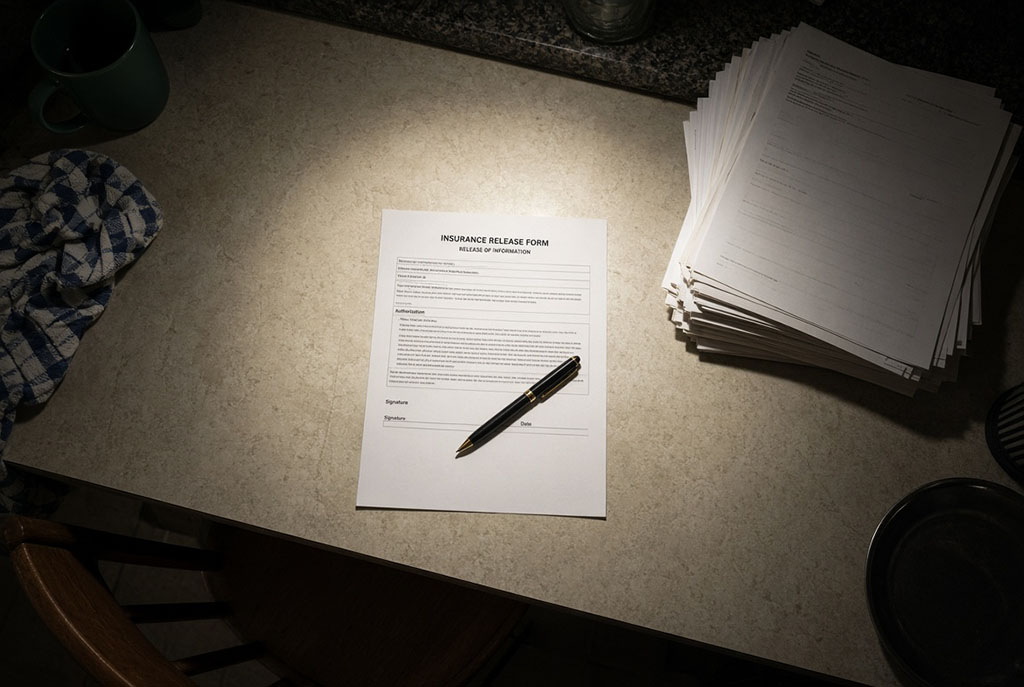
This is the one step in the process that is difficult to undo. An adjuster referring to “the claim” is describing whichever claim is in front of them, which is not necessarily every claim the crash created.
If a release, settlement agreement, or any document requesting a signature has arrived and has not been signed, that is the moment to have someone read it. Give us a call at 302-466-5664 before it goes back.
What Should the Family Do After a Fatal Delaware Crash?
Most of this is documentation, and it gets harder every week it waits. Vehicles get sold for scrap, nearby security footage is overwritten on short loops, and witnesses stop answering unfamiliar numbers.
- Do not give a recorded statement. The other driver’s insurer will ask early, and there is nothing in it for the family.
- Open the estate. Contact the Register of Wills in the county where the person lived. Without letters, the survival claim cannot be filed.
- Preserve the vehicle and the records. Do not authorize a salvage sale, and request the crash report and the ambulance and hospital records early.
- Write down who depended on the person. Financial support, care they provided, and what has changed since. That list is the wrongful death claim.
- Sign nothing from an insurance company first. Releases and settlement agreements are the documents that close options.
What If the Fatal Crash Happened While the Person Was Working?
A work-related fatal crash may create a Delaware workers’ compensation death benefit claim in addition to claims against responsible drivers or other third parties. Those benefits operate under a separate statutory system, and they can create coordination and lien issues in the liability case that are better identified early than at settlement. Our Delaware work accident practice handles both sides of that problem.
Does the Type of Claim Determine How Much Insurance Is Available?
Not necessarily. The legal claims and the available insurance are separate questions, and a family can have a strong wrongful death claim against a driver carrying state minimum coverage.
A fatal crash investigation should identify the at-fault driver’s liability coverage along with any applicable personal injury protection, uninsured and underinsured motorist coverage, and other policies in the household. Delaware requires minimum PIP of $15,000 per person and $30,000 per accident under 21 Del. C. section 2118, with funeral services capped separately at $5,000. Where the at-fault driver had little or no coverage, our article on an at-fault driver with no insurance in Delaware covers how those layers are reached.
Where a Lawyer Changes the Outcome
The work in a fatal crash case is concrete and it is front-loaded.
In the first days: preserve the vehicle, identify and request video before it is overwritten, and secure the crash report and the investigating agency’s file.
In the first weeks: identify the statutory beneficiaries, open the estate so the survival claim can be filed, obtain the EMS and hospital records, and locate every applicable insurance policy.
Before settlement: value the wrongful death and survival damages separately, resolve medical and comp liens, determine the beneficiary interests under section 3724(c), and review the release language before anything is signed.
This article is general information about Delaware law rather than advice about a particular case. Fatal crash claims turn on records that have to be read.
FAQs about Delaware Wrongful Death and Survival Actions
Can more than one family member file a wrongful death case in Delaware?
No. Section 3724(e) permits only one wrongful death action per death. Everyone who qualifies as a beneficiary participates in that single action, and the recovery is divided among them in shares set by the verdict.
Is a will required to bring a survival action?
A will is not required, but an estate is. Where there is no will, the Register of Wills can appoint an administrator, and that person has the same authority to bring the survival claim as an executor named in a will.
What happens if the person who died was partly at fault for the crash?
Delaware applies comparative negligence under 10 Del. C. section 8132. Recovery is not barred where the plaintiff’s negligence was not greater than the defendant’s, and damages are diminished in proportion to the negligence attributed to the plaintiff. Fault allocation is therefore contested closely in fatal cases.
Does a criminal charge against the other driver help the civil claims?
A criminal case can produce useful evidence, but a conviction is not required and an acquittal does not end the civil claims. The two proceedings use different standards of proof and move on separate schedules.
What does it cost to have a fatal crash case reviewed?
Nothing for the review itself. The firm works on contingency, so there is no retainer and no fee unless there is a recovery, and consultations are free, including by Zoom.
Talk to a Delaware Fatal Crash Attorney
If a family member died after a Delaware crash, we can review whether the case involves a wrongful death claim, a survival action, or both. The consultation is free.
Bring the crash report if you have it, any letters or forms from insurance companies, and whatever you know about who depended on the person financially. If an estate has been opened, bring the letters from the Register of Wills. If a document is waiting for a signature, bring it unsigned.
The office is on Main Street in Odessa, about ten minutes from Middletown, so this does not require a drive to Wilmington. Evening and Zoom appointments are available. Give us a call, 302-466-5664, or start from the contact page.