

Why Delaware Law Won’t Let an Insurance Company Call It an “Independent” Medical Exam
It is not independent, and Delaware law says so directly. The doctor is chosen by the employer’s insurance company, paid by the employer’s insurance company, and legally cannot be described as an “Independent Medical Examination” or “IME” on any document or in any proceeding connected to a Delaware workers’ compensation claim. The correct term used in Delaware practice is a Defense Medical Examination, or DME, and the difference in that name is not just wording. It reflects who the exam actually works for.

There is no such thing as a truly independent medical evaluation when the insurance company is the one that sets it up. That does not mean the doctor is lying or acting in bad faith. It means the structure of the exam has a built-in conflict, and knowing that going in changes how you should prepare for it.
Why Delaware Banned the Term “Independent Medical Examination”
Under 19 Del. C. § 2343, a medical examination requested by an employer, or performed by a doctor who is an employee of an insurance company, paid by an insurance company, or under contract to an insurance company, “shall not be referred to as an Independent Medical Examination or IME in any proceeding or on any document relating to a matter” under Delaware’s workers’ compensation law. The Industrial Accident Board can fine a party up to $500 for each use of the banned term. Lawmakers did not ban the phrase over a technicality. They banned it because the word “independent” implies a level of neutrality the exam does not actually have, and Delaware decided injured workers deserve accurate language about who that doctor is really working for.
What Section 2343 Actually Requires
The statute lays out a specific process, not a blank check for the employer to demand exams whenever it wants. After a work injury, and during the period an employee remains disabled, the employer or the Industrial Accident Board can require the employee to submit to an examination “at reasonable times and places and as often as reasonably requested,” performed by a physician selected and paid by the employer. The word “reasonable” matters here. An exam scheduled with almost no notice, at a location an injured worker cannot realistically reach, or requested so frequently that it starts to look like harassment rather than genuine medical evaluation, can be challenged as unreasonable under the statute.
The statute also addresses what happens to anything said during the exam. Under subsection (c), facts communicated to or learned by the examining physician are not privileged, meaning statements made during a DME can surface later in a hearing or other proceeding connected to the claim. That is a meaningful difference from a private conversation with your own treating doctor, and it is one more reason to think through what you say during a DME rather than treating it as an informal chat.
What “DME” Really Means, and Who Picks the Doctor
A Defense Medical Examination is performed by a doctor selected and paid by the employer’s insurance carrier, for the purpose of giving the insurance company its own medical opinion about an injured worker’s condition, treatment needs, or ability to return to work. The injured worker has no say in which doctor is chosen. That doctor typically sees the worker once, for a limited exam, often without access to the full treatment history that the worker’s own treating physician has built over months of visits. None of that makes the DME doctor’s opinion automatically wrong, but it does explain why DME opinions and treating-physician opinions disagree as often as they do. One doctor has an ongoing relationship with the patient. The other is being paid by the party with a financial interest in a lower-cost outcome.
Can You Bring Your Own Doctor to the Exam?
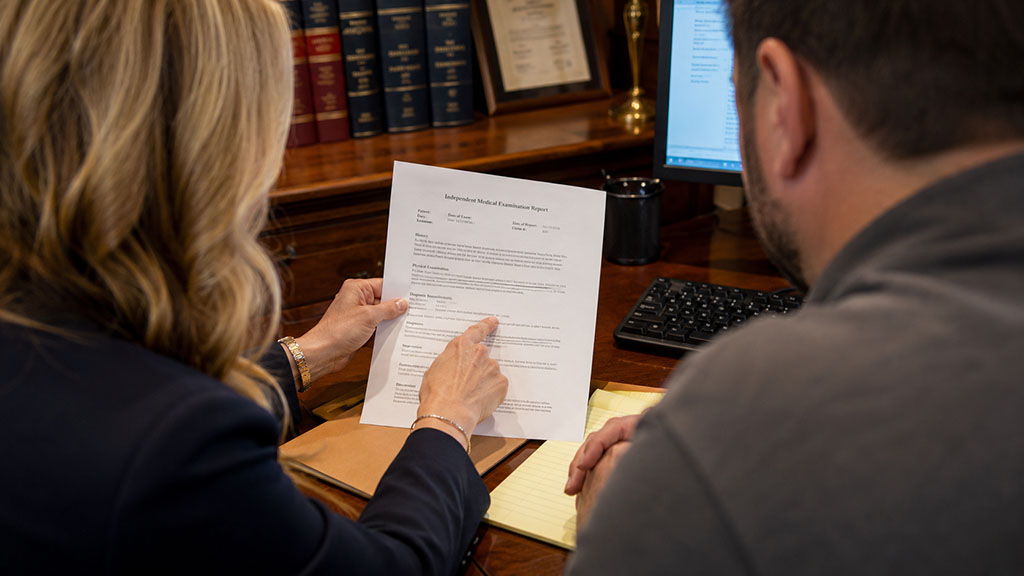
Yes. Section 2343 specifically gives an injured worker the right to have a physician of their own choosing present at the DME, at the worker’s own expense, to observe and participate in the examination. Few injured workers know this option exists, and even fewer use it, but having your own doctor in the room can matter if the DME report later contains claims about what happened during the exam, what the worker said, or what movements the worker could or could not perform. A second set of eyes in the room is one of the only checks an injured worker has on an exam they did not choose.
What Happens If You Refuse to Attend a DME
Refusing to show up, or obstructing the exam once you arrive, has a real cost. Under Section 2343, refusal or obstruction can suspend your right to workers’ compensation benefits for as long as the refusal continues, and that suspended period is deducted from the total time benefits would otherwise have been payable. In plain terms, skipping the exam does not avoid the DME process. It just puts your wage-loss checks on hold while you refuse.
What Counts as “Obstructing” an Exam
Obstruction is not limited to refusing to walk through the door. Showing up but refusing to perform requested movements without a legitimate medical reason, being deliberately uncooperative with the doctor’s questions, or repeatedly rescheduling without genuine cause can all be treated as obstruction. If you have a real medical reason you cannot complete part of an exam, such as pain that prevents a specific movement, say so clearly and make sure it gets documented, rather than simply declining without explanation.
Who Pays for the Exam and Your Time
The employer’s insurance carrier pays the DME doctor directly. For any examination after the first one, the statute also requires the employer to pay the injured worker’s reasonable travel expenses and any lost wages caused by attending. If a carrier is scheduling repeat DMEs and not covering your travel costs or lost time for the second, third, or later exam, that is a statutory obligation being skipped, not a discretionary courtesy. Keep receipts for mileage, parking, and anything else connected to the trip, and keep a record of the hours you missed from work, since carriers do not always calculate reimbursement correctly on their own and rarely volunteer to double-check the math in your favor.
What the DME Doctor Is Actually Evaluating
DMEs typically get scheduled around a handful of recurring questions: whether the worker has reached maximum medical improvement, whether requested treatment such as surgery or continued physical therapy is medically necessary, whether the worker can return to full duty, modified duty, or no duty at all, and what permanent impairment rating, if any, the injury warrants. Each of these questions can directly affect whether wage-loss benefits continue, get reduced, or stop altogether, which is exactly why the insurance carrier wants its own medical opinion on the record before any of those decisions get made. A DME is rarely scheduled out of routine curiosity. It usually gets ordered at a specific decision point in the claim, right before a hearing, right after a treating physician recommends a costly procedure, or right when wage-loss payments have continued long enough that the carrier wants a second opinion on the books.
How a DME Report Can Affect a Settlement Offer
A DME report does more than answer a return-to-work question. It often becomes one of the main pieces of evidence an insurance carrier uses to decide how much a claim is worth, or whether to push for a settlement at all. A DME opinion that finds you at maximum medical improvement with a low impairment rating gives the carrier a number to build a lowball settlement offer around, sometimes before your own treating physician has finished documenting the full extent of your injury. This is part of why the timing of a DME matters. A DME scheduled early in treatment, before surgery has been discussed or an accurate impairment rating exists, can produce an opinion that undervalues the claim in exactly the way a rushed settlement offer would. If a settlement conversation starts soon after a DME, it is worth asking directly whether the number being offered was built around that report, and whether your own treating physician agrees with its conclusions before you consider it.
What to Do Before, During, and After a DME
A DME is not the moment to relax and assume the exam is a routine formality.
- Before the exam, review your own medical records so your description of symptoms and treatment history stays consistent with what your treating doctor has already documented.
- Bring your own physician if you can arrange it, especially for a claim where the treatment or impairment rating is already disputed.
- During the exam, answer questions honestly and completely, but do not exaggerate or minimize your symptoms in either direction. Both extremes can be used against a claim.
- Note the exam’s actual length and what was and was not physically tested, since a DME report claiming a thorough evaluation after a five-minute exam is worth documenting for later.
- After the exam, write down what happened while it is fresh, including what the doctor asked, what tests were performed, and how long the whole visit took.
Can the DME Report Alone End Your Benefits?
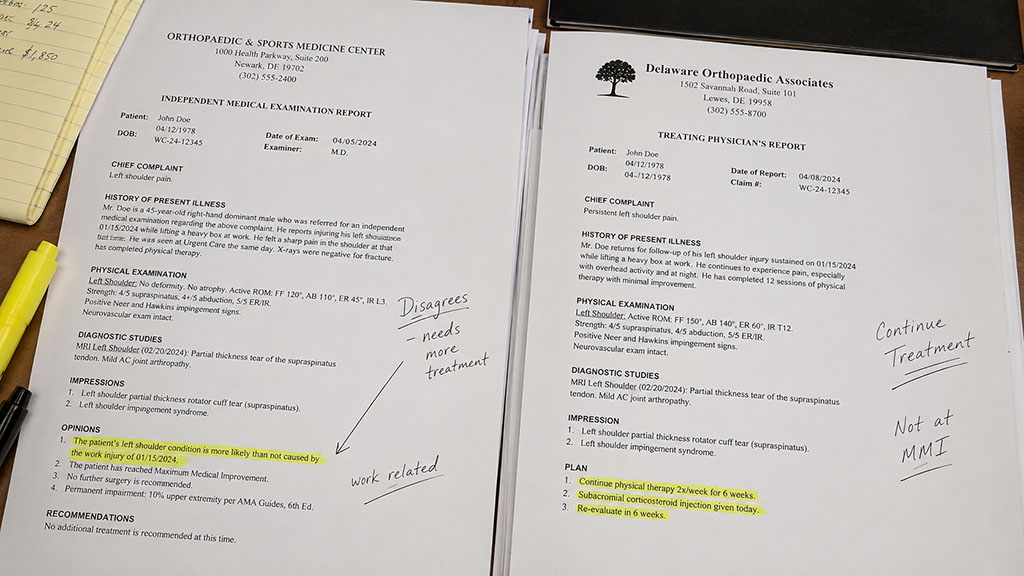
I’ll give the honest lawyer answer: it depends on what the report says and how the rest of your medical record lines up against it. A DME opinion carries weight, but it is not automatically the final word. If your treating physician disagrees with the DME’s conclusions, that disagreement becomes a factual dispute the Industrial Accident Board can be asked to resolve, typically with both sides’ medical evidence presented at a hearing. A DME report that recommends returning to full duty a week after major surgery, for example, is the kind of conclusion that invites a closer look rather than automatic acceptance.
If the DME Doctor Downplays Your Injury, What Are Your Options
Getting a DME report back that understates your injury, disputes your need for treatment, or claims you can return to work sooner than your treating doctor recommends is common, and it is not the end of the claim. Your treating physician can respond directly to the specific findings in the DME report, ideally addressing each disputed point rather than issuing a general disagreement. From there, the disagreement between the two medical opinions typically gets resolved through the claims process or, if necessary, a hearing before the Industrial Accident Board where both records are weighed. Knowing this option exists before the DME report arrives, not after, changes how much the report by itself can control the outcome of a claim. A single unfavorable opinion is a data point in the file, not a verdict on your case.
FAQs about IME and DME Exams in Delaware Workers’ Comp Claims
Do I have to attend a DME if my employer schedules one?
Generally yes, as long as the request is reasonable in timing, location, and frequency. Refusing without a valid reason can suspend your wage-loss benefits for the period of refusal.
Can I record the DME exam myself?
Delaware’s workers’ compensation statute does not address personal recording directly, and practices vary. Bringing your own physician under Section 2343 is the option the law explicitly provides.
What if the DME doctor asks me questions unrelated to my injury?
You can decline to answer questions that go beyond the scope of the medical evaluation, and noting any unusual or off-topic questioning afterward can matter if the exam is later challenged as unreasonable.
Does my own doctor’s opinion outweigh the DME doctor’s opinion?
Not automatically. Both opinions become part of the record, and the Industrial Accident Board weighs them based on the medical evidence and each physician’s basis for their conclusions.
Can the insurance company keep scheduling DMEs over and over?
Only within the statute’s “reasonable” standard. Repeated exams scheduled without a genuine medical basis can be challenged as unreasonable under Section 2343.
What if I cannot afford to bring my own doctor to the DME?
The option exists, but the cost falls on the employee under the statute. If cost is a barrier, discuss your specific claim with an attorney about which cases justify the added expense.
Is a Delaware DME the same thing as an IME in another state?
Functionally, yes, both describe an employer-arranged medical exam. Delaware simply requires accurate language for what the exam is, since state law bars calling it “independent.”
Talk to a Delaware Attorney Before Your Next DME
An exam set up, chosen, and paid for by the insurance company is not neutral, no matter what it gets called. The Law Office of Heather A. Long handles the full range of Delaware work injury claims, prepares injured workers for DMEs, reviews the resulting reports line by line, and pushes back when a DME opinion does not match the rest of the medical record. Call 302-466-5664 or visit 501 Main Street, Suite 638, Odessa, DE 19730 for a free consultation before your next scheduled exam. Bring your workers’ comp claim documentation, any DME scheduling notice you have received, and your treating physician’s most recent notes, so the firm can help you walk into that exam prepared rather than caught off guard.