
Same Crash, Different Arguments for Riders
The arguments can be different. The law is not. Delaware decides fault in a motorcycle crash the same way it decides fault in a car crash: who was careless, and whether the injured person’s share of the blame is greater than the other driver’s. As Heather puts it, “two wheels should not mean two different standards of justice.”
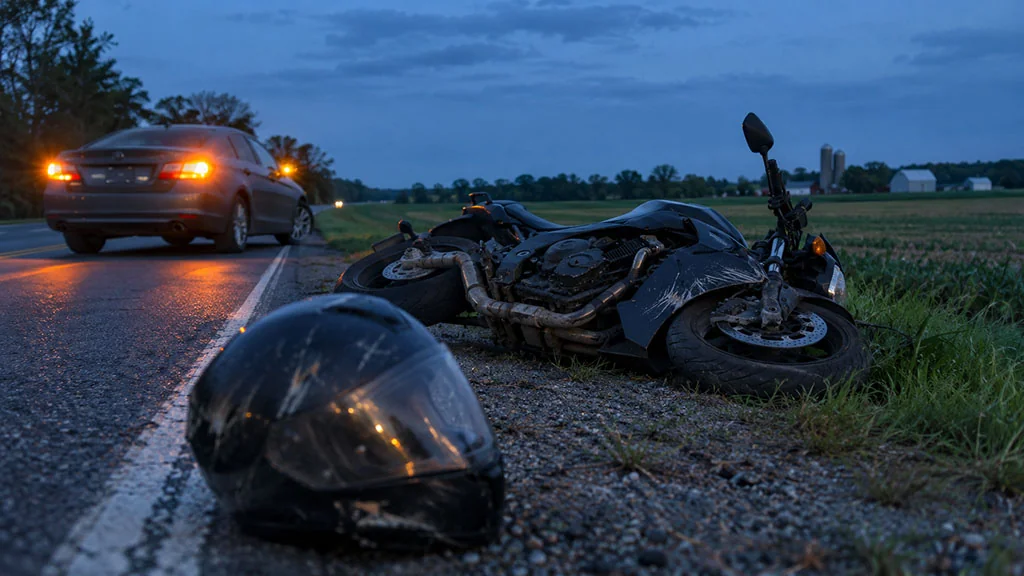
What changes is the conversation with the insurance company. An adjuster looking at a rider’s claim can raise questions that are specific to riding: how fast you were going, where you were in the lane, whether you wore a helmet, and whether the driver could even see you. Each of those has a Delaware answer, and the table below puts them side by side.
| What the insurer argues | What Delaware law says | What to check |
|---|---|---|
| “The driver looked and didn’t see the bike.” | Fault turns on whether the driver acted with reasonable care, not on whether the driver noticed you | Witnesses, photos of the sightlines, the police report |
| “You weren’t wearing a helmet.” | Wearing a helmet is required for riders under 19 and riders in their first two years after a new endorsement, under 21 Del. C. § 4185, with a separate rule for riders on an instruction permit | Your age, your endorsement date, what the ambulance report recorded |
| “You were riding at the edge of the lane.” | Every vehicle has to stay as nearly as practicable within a single lane, under 21 Del. C. § 4122; a motorcycle anywhere inside its lane is in its lane | Where the vehicles came to rest, where the damage is on each one |
| “Your PIP is used up.” | The PIP minimum is $15,000 per person, and a motorcycle owner can elect certain exclusions under 21 Del. C. § 2118 | The declarations page of your motorcycle policy |
How Delaware Decides Fault in a Motorcycle Crash
Delaware uses comparative negligence, which is the question of whether part of the crash can be blamed on you, and what that does to your recovery. Under 10 Del. C. § 8132, an injured person can still recover as long as their own negligence was not greater than the defendant’s. Any recovery is reduced in proportion to the share of fault assigned to them.
That rule says nothing about motorcycles. It applies the same way to a rider, a driver, a passenger, or a pedestrian. Arguments about lane position, speed, or helmets matter to the extent they can be tied to how the crash happened or how the injuries happened, and they have to be supported with evidence, not with assumptions about riders in general.
The deadline is also the same. A personal injury lawsuit in Delaware generally has to be filed within two years of the date the injuries were sustained, under 10 Del. C. § 8119. Settlement talks with an adjuster do not, by themselves, extend it.
“I Looked, But I Didn’t See the Bike”
It is one of the first things a driver says after pulling into a motorcycle’s path. Heather’s answer is direct: if a driver says “I looked, but I didn’t see the bike, that doesn’t mean that they’re not responsible for hitting the bike.”
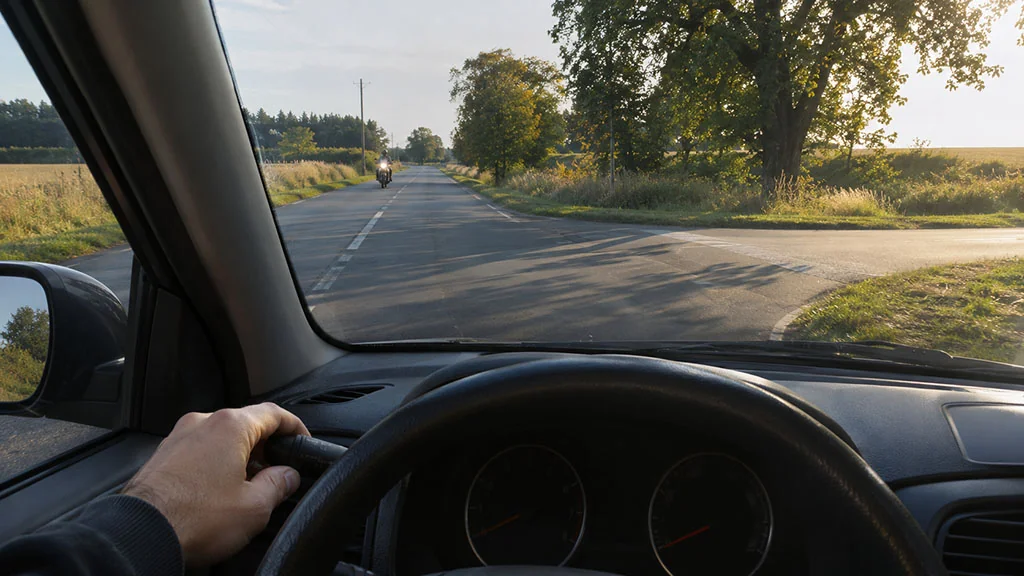
The reason is that negligence is measured by what a careful driver would have done, not by what this driver happened to notice. A driver turning left across oncoming traffic or pulling out of a side street has to make that move with reasonable care. Saying “I never saw it” can be an admission that the driver did not look carefully enough, not a defense.
The evidence that answers it is physical. Photos taken from the driver’s position show whether anything blocked the view. Witnesses can say whether the bike’s headlight was on and how fast it was moving. The damage to each vehicle shows the angle of impact. Those details can disappear within days, which is why the first steps further down this page matter.
Lane Position and Lane Splitting
Delaware’s lane rule, 21 Del. C. § 4122, requires a vehicle to be driven as nearly as practicable entirely within a single lane, and not moved out of that lane until the move can be made safely.
A rider can pick a position inside the lane for good reasons: to be seen, to avoid debris, to stay out of a driver’s blind spot. Riding in the left part of your own lane is still riding in your lane. An argument that a rider in that spot had fewer rights than a car in the same place does not come from the statute.
Riding between lanes of traffic is a different situation, because it puts the bike outside a single lane. If that is part of your crash, it is a fault question to talk through with a lawyer before you discuss it with an adjuster. It does not automatically end a claim, because the comparative negligence rule above still applies.
Riding Without a Helmet in Delaware
Heather puts the core point plainly: “not wearing a helmet does not mean that somebody else is allowed to hit you.” A missing helmet has nothing to do with whether the other driver ran a stop sign.
Delaware’s helmet rule, 21 Del. C. § 4185, has three parts:
- Every rider and passenger has to have an approved helmet in their possession and wear approved eye protection.
- Riders and passengers under 19 have to wear the helmet.
- Riders endorsed on or after July 30, 2023, and their passengers, have to wear a helmet for the first two years after the endorsement.
Riders on a temporary motorcycle instruction permit have a separate helmet and eye protection requirement under 21 Del. C. § 2703, as the synopsis of Senate Bill 86 (2023) notes. A violation of section 4185 carries a civil assessment of $25 to $50, and the statute says it may not be classified as a criminal offense.
Whether helmet use can affect the damages side of a Delaware claim, meaning how much is recovered for a head injury, is a fact-specific legal question. Do not assume the answer either way. Bring it up on the first call, along with your age and the date of your endorsement.
What a Former Paramedic Reads in the Records
Before she was a lawyer, Heather worked on the other side of the ambulance doors. In her words: “I look closely at the emergency records. I look closely at the transportation records.” The ambulance run report and the first hospital chart are written while the rider is being treated, which is part of why they matter in a motorcycle case.
Those records can show how alert the rider was at the scene, recorded in measures like the Glasgow Coma Scale, which scores eye opening, verbal response, and motor response from 3 to 15. They can show what the crew saw and what the emergency physicians flagged for follow-up. Heather’s point is that she reads them for the signs the paramedics and emergency staff were picking up on that could point to complications later, so those signs are not lost by the time anyone talks about a settlement.
Motorcycle PIP Exclusions and the $15,000 Floor
PIP, personal injury protection, is the part of Delaware auto insurance that pays medical bills and net lost earnings after a crash regardless of who caused it. Under 21 Del. C. § 2118, the minimum is $15,000 per person and $30,000 per accident, for expenses incurred within two years of the crash.
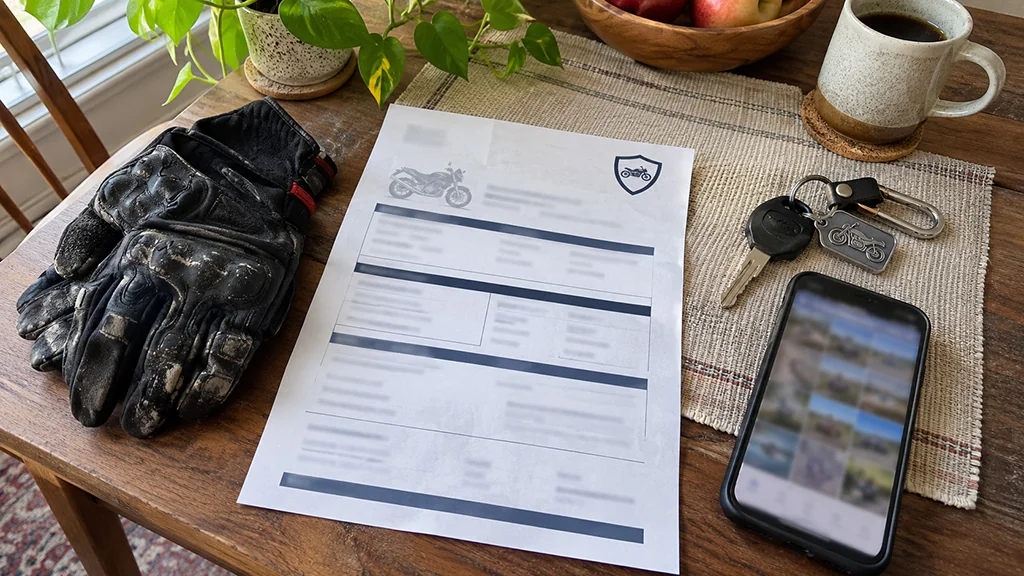
The same statute has a rule written only for motorcycles. A motorcycle owner may elect to exclude coverage for injuries while the bike is not on a highway, and for any injury where no other vehicle was involved by actual collision or contact. Owners can also elect deductibles and similar reductions in writing. Heather covers the exclusion in a short video, Do Delaware Motorcycles Have Mandatory Coverage?
The practical step is the same either way: pull the declarations page of your motorcycle policy and see what PIP limit, deductible, and exclusions are on it. Remember that the $15,000 floor has to cover lost wages as well as medical bills. If you were hurt while working, the coordination questions in our article on workers’ comp and PIP after a car accident apply to a bike too.
When the Other Driver Has Minimum Coverage
Delaware’s minimum bodily injury liability coverage is $25,000 per person and $50,000 per accident, under 21 Del. C. § 2902. That is the most the other driver’s policy has to pay for one injured person. For a rider with surgery or a long recovery, it can run out fast. Heather’s way of saying it: “being 100% right is not as beneficial as having 100% coverage for your injuries.”
The next place to look is your own policy. Under 18 Del. C. § 3902:
- Uninsured motorist coverage has to be included at least at the minimum limits unless a named insured rejected it in writing.
- Underinsured motorist coverage is an option insurers have to offer, up to $100,000 per person and $300,000 per accident, but not more than your own bodily injury liability limits.
That last limit is the trap. If you carry minimum liability on the bike, the underinsured coverage your insurer has to offer is capped at that minimum. Our article on what happens when the at-fault driver has no insurance walks through the uninsured side in more detail.
First Days After a Motorcycle Crash
These are the steps Heather lists for the first few days, in order, with two additions:
- Get medical care. Make sure everybody is okay and get evaluated, even if the adrenaline says you are fine.
- Photograph everything. The crash, the site, the damage to the bike, and where each vehicle ended up.
- Get witness contact information. Names, phone numbers, and email addresses for anyone who saw it, so they can be reached months from now.
- Keep your gear as it is. Do not repair or throw out the helmet, jacket, or boots. Damage to gear can show where and how you were struck.
- Request the police report and pull your declarations page. The report gives the other driver’s insurer; the declarations page tells you your own PIP, uninsured, and underinsured limits.
Before you give a recorded statement to the other driver’s insurer, decide what you will say about speed, lane position, and helmet use. Those statements can become evidence, so it is worth a phone call first.
How a Lawyer Changes a Motorcycle Claim
Delaware does not require you to have a lawyer to make an injury claim. What counsel changes is who gathers the evidence and who answers the rider-specific arguments.
In the first days
Locating witnesses, getting the scene and vehicles documented before they change, and sending letters asking that any video from nearby businesses be kept.
In the first weeks
Identifying every policy that applies, including your PIP elections, uninsured and underinsured coverage, and any coverage on other household vehicles. Getting the ambulance and emergency records early and reading them for what they show.
Before settlement
Answering the helmet, lane, and visibility arguments with evidence, making sure the full course of treatment and lost income are documented, and checking that settling with the other driver does not cut off a claim on your own underinsured coverage. Delaware has a specific notice process for that step in 18 Del. C. § 3902A.
For more on how the firm handles these claims, see the auto accident practice page.
FAQs about Delaware Motorcycle Crash Claims
Can I recover if I was partly at fault?
Yes, as long as your share of the negligence was not greater than the other driver’s. Your recovery is reduced by your percentage of fault under 10 Del. C. § 8132.
Do I have to wear a helmet in Delaware?
You have to wear one if you are under 19, if you are in your first two years after a motorcycle endorsement issued on or after July 30, 2023, or if you are riding on an instruction permit. Every rider has to carry an approved helmet and wear eye protection.
Does my motorcycle policy include PIP?
Check the declarations page. Delaware’s PIP statute lets a motorcycle owner elect to exclude off-highway injuries and injuries with no other vehicle involved, and owners can also choose deductibles, so two bike policies can look very different.
What if the driver who hit me only has $25,000 in coverage?
Look at your own uninsured and underinsured coverage and any other policies in your household. Before accepting the driver’s policy limit, get advice on protecting an underinsured claim under 18 Del. C. § 3902A.
How long do I have to file a lawsuit?
Generally two years from the date of the injury under 10 Del. C. § 8119. PIP has its own two-year window for expenses, which is a separate clock.
What does a consultation cost?
Nothing. The firm works on contingency, so there is no retainer and no attorney fee unless there is a recovery, and consultations are free, including over Zoom.
Talk to a Former Paramedic About Your Crash
If an adjuster is already asking about your helmet, your speed, or where you were in the lane, those questions deserve an answer backed by evidence before you give one on a recorded line.
Bring the police report or report number, your motorcycle declarations page, any photos from the scene, the names of witnesses, and whatever medical paperwork you have from the ambulance or emergency room. If you still have your helmet and gear, keep them as they are. Heather reads the records herself and can tell you which of the arguments above apply to your crash.
The office is at 501 Main Street in Odessa, about ten minutes from Middletown, with evening appointments and Zoom consultations available. Give us a call, 302-466-5664, or start from the contact page.