

Why a Fast Offer After a Brain Injury Is Risky
Not until your family knows what the injury is going to need. A signed release generally ends the claim against the people it releases, and the Delaware Supreme Court has refused to undo a release because a known injury turned out to be worse than anyone expected. As Heather puts it, “brain injuries take time to heal,” and the true cost of one may not be clear in the first days or weeks.

A quick offer can only be based on what is known at that moment. The settlement has to cover what comes later: therapy, lost work, changes to the house, and care that may last for years. Here are the clocks that actually matter after a Delaware crash, so your family can see how much time there is to get the answer right.
| Clock | How long | Where it comes from |
|---|---|---|
| Deadline to file an injury lawsuit | Generally 2 years from the date of the injury | 10 Del. C. § 8119 |
| PIP coverage for medical bills and lost earnings | Expenses incurred within 2 years of the crash, $15,000 per person minimum | 21 Del. C. § 2118 |
| Cancelling an early release signed without a lawyer | 15 days, for qualifying releases, once the law takes effect March 24, 2027 | 18 Del. C. § 2322 (Senate Bill 189) |
| Your underinsured carrier’s answer to a proposed settlement | 60 days after notice of the offer | 18 Del. C. § 3902A |
Why Brain Injuries Are Hard to Price Early
The CDC’s guidance on mild traumatic brain injury and concussion says some symptoms appear right away while others may not show up for hours or days. It also says problems can be overlooked by the injured person, by family members, and by health care providers, and that a person may not recognize or admit the problems they are having.
Those are the reasons a family should not measure an injury by how the person looks on the day the adjuster calls. Trouble concentrating, memory gaps, irritability, sleep changes, and headaches can all be part of a brain injury, and they may only become clear once the person tries to go back to work or school.
Heather’s view of the timing is blunt: “the insurance company wants to pay you quickly because they want to buy your claim from you at the cheapest rate possible.” Her instruction follows from it: do not settle “until you know exactly what treatment you’re going to need.”
What Signing a Release Does in Delaware
A release is the document that trades the settlement money for your agreement to give up the claim. Once it is signed, Delaware courts treat it as a contract. Getting out of one is hard.
One way to challenge a release after the fact is mutual mistake, meaning both sides were wrong about a basic fact when they signed. The Delaware Supreme Court in McLarthy v. Hopkins (2011) said that if mutual mistake underlies a general release, the release is voidable. The limit is what matters for a brain injury. In Hicks v. Sparks (Del. 2014), as described by the Superior Court in Currence v. Hastings & Martin, the Supreme Court said that knowledge of the existence of an injury will preclude a finding of mutual mistake, and that the mistake must be about a past or present fact, not about future conditions.
Put plainly: if everyone knew there was a head injury when the release was signed, finding out later that it is worse than expected has not been enough to undo the release. The person who signed has been treated as accepting that risk.
Delaware’s New 15-Day Cancellation Rule
Senate Bill 189, signed September 24, 2026, adds a new section to Delaware’s insurance code, 18 Del. C. § 2322. It takes effect March 24, 2027. Heather’s summary of it: if you settled within the first 15 days without a lawyer, “you may be able to have that settlement overturned or rescinded.”
The exact conditions in the bill text are narrower than that summary:
- Motor vehicle injuries only. It applies to a release of a claim for injuries from a motor vehicle accident.
- Signed early and without a lawyer. The release has to be signed by the individual within 30 days of the accident, without an attorney’s help.
- Fifteen days to cancel. The window runs 15 days from signing, or from cashing the check or receiving an electronic payment if no release was signed.
- Notice and money back, with proof. Written notice of rescission goes to the released party, its lawyer, or its insurer, and any money received is returned, no later than 10 days after the 15-day window closes, by certified mail, certificate of mailing, ACH tracking, or another recognized tracking method.
The insurer may hold back any future settlement payment until it confirms the money came back. Qualifying releases also have to state the right to cancel conspicuously and separately.
For a brain injury family, read it narrowly. The bill text speaks of a release signed by the individual and does not mention guardians, parents, minors, or estates. Its effective date is March 24, 2027, so do not count on it for a release signed before then. And 15 days is a short time to learn the extent of a brain injury. It can help in a narrow set of cases. It is not a reason to sign.
What the First Records Show About a Brain Injury
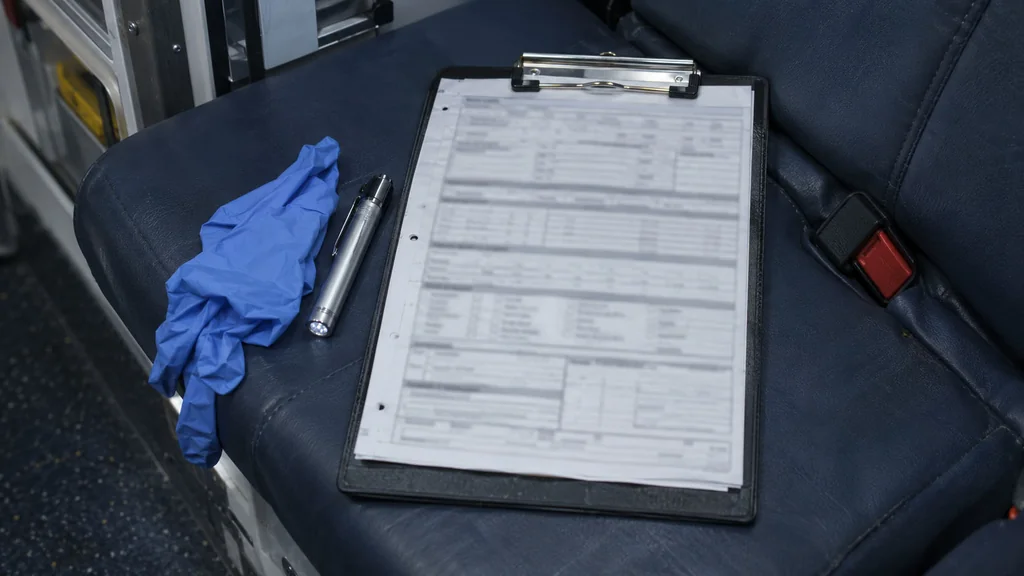
Heather was a paramedic before she was a lawyer, and she reads a brain injury file from the first ambulance call forward. In her words: “I look closely at the emergency records. I look closely at the transportation records. I look closely at the initial hospital records.” She reads them for the signs paramedics and emergency staff were picking up on that could point to complications later.
One of the measures those records carry is the Glasgow Coma Scale. It scores three things separately, eye opening, verbal response, and motor response, for a total from 3 to 15. A Military Health System reference sheet lists 13 or higher as correlating with mild brain injury, 9 to 12 as moderate, and 8 or less as severe.
What a reader of those records looks for:
- The score at more than one point. A score at the scene compared with the score on arrival at the hospital can show which way the patient was moving.
- The components, not just the total. Two patients with the same total can have different eye, verbal, and motor findings.
- Intubation and sedation. A patient who is intubated cannot give a verbal response, and the score is recorded with a “T” to show that.
- What the emergency physician ordered next. Imaging, admission, and follow-up instructions can show what the treating team was worried about.
Those records are written while the patient is being treated. A settlement offer made weeks later is not.
Costs That Show Up Years Later
The first hospital bill is the number a family sees. Heather’s point is that, after catastrophic and spinal cord injuries, it may not be the biggest cost. In her words, the list “means home modifications, this means vehicle modifications, this can mean life care plans.”

A life care plan is a written projection of the care, equipment, and services a person is expected to need over their lifetime, with costs attached. It turns “they’ll need help” into numbers a settlement can be measured against. A first offer made before anyone has looked at those needs cannot account for them.
Lost earnings belong in the same picture. A brain injury that changes how someone works can change what they earn for years, which is a separate number from the medical bills.
When the At-Fault Driver’s Policy Is Too Small
Delaware’s minimum bodily injury liability coverage is $25,000 per person, under 21 Del. C. § 2902. For a catastrophic injury, that can be gone quickly. Heather’s sequence when the at-fault policy can’t come close:
- Don’t take the first offer.
- Check the at-fault driver’s assets and other insurance. Make sure there are no other policies or other means of paying.
- Use your own coverage. Uninsured and underinsured motorist coverage under 18 Del. C. § 3902, coordinated with PIP and health insurance.
The order matters. Under section 3902(b), the underinsured carrier owes nothing until the at-fault driver’s bodily injury limits are exhausted by settlement or judgment, and section 3902A sets out a notice to that carrier when there is an offer from the at-fault driver, which the carrier then has 60 days to answer. Heather’s warning about the order of payment: “We don’t want to have the wrong insurance company paying the wrong benefits, which could result in a loss of money to you.” See our article on what happens when the at-fault driver has no insurance for the uninsured side.
Who Can Speak for an Injured Family Member
When the injured person cannot make decisions, the family may be the one taking the adjuster’s calls. Heather’s caution: “it’s not always your next closest family member.”
In Delaware, the Court of Chancery has the power to appoint a guardian of the person, the property, or both, for a person with a disability under 12 Del. C. § 3901, and that definition reaches people under 18 who cannot legally manage their own property. If a minor or an adult who cannot manage their affairs is involved, a court proceeding may be needed before anyone has authority over the claim or the money. That is separate from any estate planning documents the family already has, and it is worth sorting out before an offer is on the table.
If the injury was fatal, the claim follows different rules. Our article on fatal car accident claims in Delaware covers who brings it.
Questions to Ask on the First Call
Heather’s advice is that the first call should be to an attorney, and that the family is interviewing the lawyer, not the lawyer’s assistant. Her questions:
- Who will handle the case? The attorney you are talking to, or an assistant or associate from there on out.
- How quickly will you act? Records, video, and witness contact details can be lost if no one asks for them early.
- What is your plan for finding every insurance policy? The answer decides how much money is available to cover the injury.
What to Do Before Anyone Signs
- Do not sign a release or cash a settlement check yet. Keep any check uncashed until you have had advice.
- Keep every letter and form from every insurer. Write down who called, when, and what was offered.
- Track symptoms in writing. The CDC’s patient instructions suggest keeping track of symptoms and sharing them with the doctor. Family members can note changes the injured person may not.
- Request the ambulance and emergency room records. Those are the records described above.
- Pull the declarations pages for every auto policy in the household to see PIP, uninsured, and underinsured limits.
How a Lawyer Changes a Brain Injury Claim
Delaware does not require a lawyer for an injury claim. What counsel changes is who carries the work while the family is at the hospital. Heather put it this way: “While your family is with you in the ICU, they should not be tasked with making sure that all of the evidence is preserved.”
In the first days
Locating witnesses and getting names, phone numbers, and email addresses, setting up recorded statements, and sending letters asking that evidence be kept.
In the first weeks
Gathering the ambulance and hospital records, identifying every policy, and coordinating PIP, health insurance, and underinsured coverage so the right carrier pays first.
Before settlement
Waiting until the treating doctors can describe the long-term picture, documenting future care and lost earnings, and handling the underinsured notice under section 3902A before any release is signed. For more on how the firm handles these cases, see the catastrophic claims practice page.
FAQs about Brain Injury Settlement Offers in Delaware
Can I undo a release if the brain injury turns out worse?
Generally not on that ground alone. Delaware has held that knowing an injury existed when the release was signed defeats a mutual mistake argument, even if the injury’s future effects were misjudged.
Does Senate Bill 189 apply to my settlement?
Only if the release covers motor vehicle injuries and was signed by the individual within 30 days of the crash without a lawyer. The cancellation window is 15 days, and the law takes effect March 24, 2027, so do not count on it for a release signed before then.
How long do we have to file a lawsuit?
Generally two years from the date of the injury under 10 Del. C. § 8119. Negotiating with an adjuster does not, by itself, extend that deadline.
What if the other driver only has $25,000 in coverage?
Look at your own uninsured and underinsured coverage and any other household policies. Get advice on the notice to your underinsured carrier under 18 Del. C. § 3902A before accepting the at-fault driver’s limits.
Can a family member sign for someone who can’t?
Not automatically. If the injured person is a minor or cannot manage their affairs, the Court of Chancery may need to appoint a guardian before anyone has authority over the claim.
What does a consultation cost?
Nothing. The firm works on contingency, so there is no retainer and no attorney fee unless there is a recovery, and consultations are free, including over Zoom.
Talk to a Former Paramedic Before You Sign
If an adjuster has already put a number in front of your family, the first question is what that number leaves out. That answer comes from the records and the long-term medical picture, not from the offer letter.
Bring the offer letter and any release, the police report or report number, every declarations page in the household, and whatever discharge papers and medical records you have. If someone else may need to sign for the injured person, bring whatever powers of attorney or guardianship papers already exist.
The office is at 501 Main Street in Odessa, about ten minutes from Middletown, with evening appointments and Zoom consultations available. Give us a call, 302-466-5664, or reach the office through the contact page.